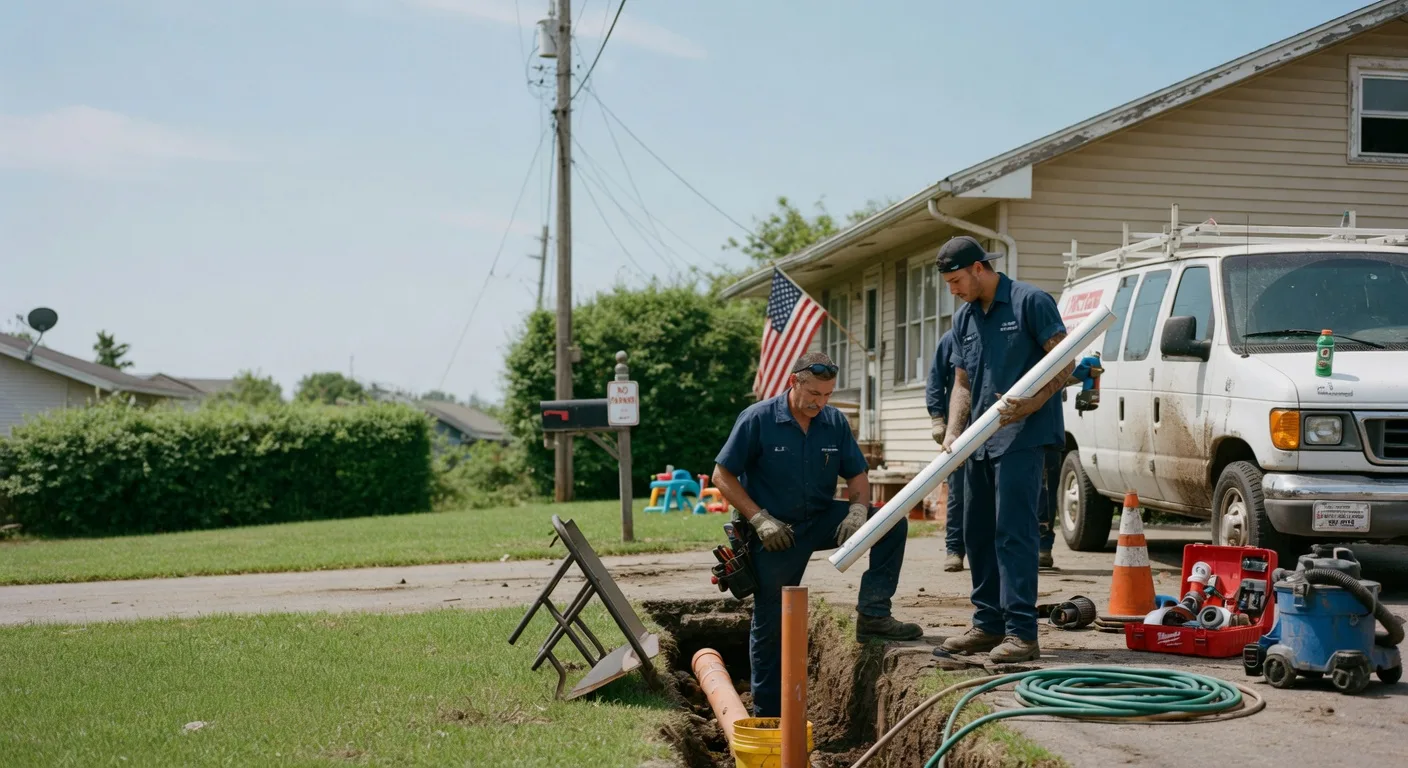
When is a drain backup a plumbing emergency?
Stop running water and call now if water is backing up from more than one drain, sewage is coming up through a floor drain or tub, a toilet overflows on its own, or you smell sewer gas inside the house. Those signs point to a blocked or failed main line. That is a different problem from one slow sink. The main line carries everything the house sends out, so when it stops, water has only one place to go, which is back up through the lowest opening in the house, usually a basement floor drain or a tub. Every load of laundry, dishwasher cycle, or shower adds to the flood, so turning off water use is the most useful thing you can do while you wait. Do not try to clear a full main line yourself; it takes a larger cable or a jetter, and sewage carries bacteria. Keep children and pets out of the affected area. A single slow drain that still empties, or a fixture that gurgles once in a while, can usually wait for a scheduled visit. A backup that is rising, spreading, or coming from several places cannot. Call (380) 262-9173 to be connected with an independent plumber in Portage, OH.
If you decide the situation is serious, a few quick actions will limit the damage. Shut off the washing machine and dishwasher, and ask everyone to hold off on flushing. If water is already on the floor, lift rugs and move belongings out of the way, and keep electrical items and cords clear of wet areas. Do not run a wet vacuum on sewage, and do not wade through it barefoot. Take photos of the water and the affected fixtures, since they help if you later need to describe the problem to an insurer. Open a window for ventilation if the smell is strong. Know where your main water shutoff is, because if a supply line is leaking rather than a drain backing up, that valve is the right one to close. Older homes often have a floor drain that is the first place sewage appears, so check it first.
What is a sewer lateral and who is responsible for repairing it?
A sewer lateral is the pipe that carries waste from your house to the main sewer line. You usually hear the term when a camera shows a crack, or when every drain in the house backs up at once.
It starts where your drain lines leave the building and runs underground to the connection with the main. Older laterals are often clay, cast iron or fibre pipe, and they fail in familiar ways. Roots work into a clay joint. The pipe sags into a belly that holds water. A section cracks or collapses. Scale narrows cast iron until little gets through.
Who repairs it depends on where the fault is and on local rules. In many places the owner is responsible for the lateral up to the property line, and sometimes all the way to the main. In others the utility owns the part under the street. Your city or sewer utility can tell you where responsibility sits for your address in Portage, OH. Ask before you assume.
Safe homeowner check: note which drains are slow, and whether it is one fixture or all of them. Stop running water and call now if every drain is backing up, or if sewage is coming up in a tub or floor drain.
A camera inspection finds the break. Cost depends on depth, access, how much must be dug or opened, the materials, and any permit. Expert Plumbers Co is a referral service. Call (380) 262-9173 and we will connect you with a plumber in Portage, OH.
Ask the plumber whether the camera run can note the distance from the cleanout to the fault, so you can tell which part of the lateral is the problem. A fault near the house, a fault at the property line and a fault under the street can each land with a different owner. Before any repair, take a screenshot or copy of the footage and keep a note of the date. Local rules may require a permit, an inspection by the building department or the utility, or notice to the sewer authority, so check before digging starts. Some utilities or cities also run programs that cover part of a lateral repair, and a few require an inspection when a property is sold. Ask your homeowner policy provider what it says about sewer line damage, because many standard policies leave it out. Older neighborhoods with mature trees tend to have more root problems, so it is worth asking about a root-resistant joint when the pipe is renewed.
We run a cafe and the kitchen line keeps blocking. Is that the same job as a house drain?
Not quite. A kitchen line that blocks again and again is usually a grease problem, and that is a different job from a house drain.
A cafe pushes far more fat, oil and food solids down the pipe than a home does. The grease cools, sticks to the pipe wall and builds layer on layer. The opening shrinks each week. That is why the blockage returns on a short cycle.
A grease interceptor, also called a grease trap, sits between the kitchen and the main line. It catches fat before it travels downstream. It only works while it has room. Once it is overfull it stops holding grease and passes it straight into the line. So it needs servicing on a schedule, not just when something goes wrong. Many jurisdictions require an interceptor and expect records of each servicing. That is a code matter, so check with your local authority.
A cable machine punches a channel through the grease and leaves the coating on the wall. Water drains for a while, then the channel closes again. A commercial line usually needs hydro jetting, which uses high-pressure water to strip the wall clean. A camera inspection then checks the pipe underneath for cracks, roots or a sag that holds water.
One slow sink is a branch problem. Every fixture backing up points to the main line.
A blocked line in a food business is a shutdown risk, so timing matters. If water is rising near the prep area, stop using the sinks and call.
What the job involves depends on access to the line, how much has to be opened up, the condition of the pipe and any permit requirement. Expert Plumbers Co is a referral service. Call (380) 262-9173 and we will refer your cafe to an independent local plumber in Portage, OH.
Keep a servicing record and a routine. Write down the date each interceptor is serviced and by whom. Authorities that require interceptors usually ask to see those records.
Train kitchen staff on what goes down the drain. Scrape plates and pans into the trash first, fit fine mesh strainers in every sink, and never pour fryer oil down any drain, even with hot water, because it cools further down the line and sets. Hot water and soap only move grease along the pipe. They do not remove it.
Learn the warning signs of a full interceptor: slow draining at the sinks nearest it, a sour or rancid smell, or grease showing in the outlet chamber.
Set the jetting interval after a camera inspection shows how fast the coating builds, so cleaning happens before a lunch rush is lost to a backup. Mention any recent menu change toward fried or fatty food when you call.
I rent out my place and the tenant says the drains are backing up. What should I ask them, and what should I arrange?
Start with a few plain questions, because the answers tell the plumber where the problem is before anyone arrives.
Ask the tenant which fixtures are affected. One slow sink or tub points to a clog in that fixture's own branch. If several drains are slow, or water rises in a tub or shower when the toilet is flushed or the washer empties, the main line is the likely culprit.
Ask when it started and what changed. Did it follow heavy rain, a laundry day, a large gathering, or a new habit such as flushing wipes? Ask whether there are gurgling sounds, a sewage smell, or water in a floor drain or basement. Ask whether anything has already been tried, especially chemical cleaners, since those are a hazard to whoever opens the pipe next.
Ask for photos or a short video of the fixtures. That is faster than a long phone call and helps if you are not living nearby.
What to tell the tenant right away: stop running the washer and dishwasher, go easy on the toilets, and do not pour cleaner down the drain. If sewage is coming up inside the home, or water is spreading across a floor, treat it as urgent and keep people and pets out of the wet area.
What to arrange: a plumber to clear the line and, if the same drain has failed before, a camera look at it. Offer the plumber the tenant's contact details and agreed times so access is not the delay. Ask whether the blockage was in the fixture branch or the main line, and whether the plumber thinks it was caused by tree roots, a sagging pipe or something that was flushed. That tells you whether it is a one-off or a repair item.
Keep notes: dates, photos, what the plumber found. Whether the cause is wear or misuse affects the conversation with the tenant, so write down what was seen rather than what was assumed. Check your lease and local rules for your own obligations.
Expert Plumbers Co can connect you with an independent plumber in Portage, OH for this: call (380) 262-9173.
The furnace or air conditioner drains into my basement floor drain and now it overflows. Is that a drain cleaning job?
"The furnace drains into my basement floor drain and now it overflows." That is a common one, and it is a drain problem with two parts. The overflow can come from either end: the small condensate line, or the floor drain it empties into.
Condensate lines clog with algae and sludge. Once it blocks, water backs up at the unit or spills from the line onto the floor. Many systems also have a trap on that line, and the trap is the first place sludge collects.
The floor drain itself can be the problem. If it is slow or backs up when you run the washer or a tub upstairs, the cause is in the house drain: grease build-up, a bellied line holding water, or root intrusion at a clay joint further out.
One slow floor drain, with the rest of the house draining fine, usually means a local blockage in that branch. Every drain in the house backing up, or the lowest drain gurgling and rising while others run, points to the main line or a failed sewer lateral.
Safe homeowner check: Look at the pipe from the unit. Is water standing in the pan or trap? Pour a bucket of water into the floor drain and watch how fast it goes. Do not pour bleach or drain chemicals into the condensate line without knowing the unit's instructions.
Stop running water and call now if the floor drain is bringing up sewage or a sewer smell, other drains in the house are slow or gurgling, water is spreading toward electrical equipment or the furnace, or the overflow comes back soon after you clear it.
A cable machine is often enough for a plain clog in the floor drain branch. A condensate line is a different job: it needs flushing or clearing at the line and trap, and may need a cleanout fitting added. If the floor drain keeps backing up, a camera inspection shows whether the main line has roots or a belly. Hydro jetting is used when grease or scale coats the pipe wall.
Expert Plumbers Co is a referral service. We connect you with an independent local plumber in Portage, OH. Call (380) 262-9173.
Ask the plumber to check both the condensate line and the floor drain, and to explain which one failed. Ask whether the condensate should drain somewhere else, since rules vary by area on where it may discharge. Cost depends on access, the parts needed, how much has to be opened up or removed, and any permit or code requirement.